


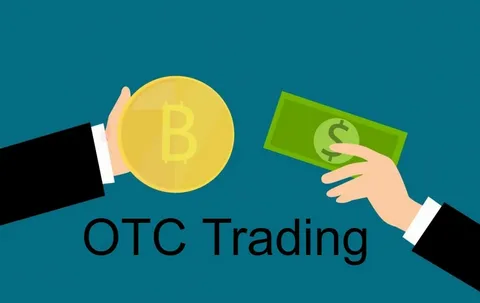
If you’ve ever wondered how the “big players” move millions in Bitcoin without causing the entire market to go into a frenzy, you have stumbled onto the world of Over-the-Counter trading. While most of us are used to the standard app interface with its flashing red and green numbers, there is an entire sub-industry dedicated to OTC crypto exchange development. Building these platforms isn’t just about creating a prettier version of a standard exchange; it is about constructing a private, high-stakes environment where discretion and deep liquidity are the only things that matter.
In a traditional exchange, you are essentially shouting your price into a crowded room and waiting for someone to shout back. In an OTC setting, it is more like a private meeting in a quiet office. This distinction changes everything about how a platform needs to be built.
The Foundation: Why Privacy Dictates the Build
The first thing anyone thinking about development needs to understand is that the user journey is completely reversed. On a retail platform, you want as much transparency as possible so everyone can see the market depth. In OTC, transparency is actually a risk. If a whale is trying to sell 500 BTC, the last thing they want is for that order to sit on a public book where other traders can see it and “front-run” the price.
Consequently, the core of an OTC platform is a one-to-one negotiation engine. Instead of an automated matching engine that pairs random buyers and sellers, the development must focus on “Request for Quote” (RFQ) systems. This allows a client to ask for a price on a specific volume, receive a private quote, and execute it without the rest of the world ever knowing it happened.
Security Beyond the Standard Firewall
When you are moving the kind of volume typically associated with OTC desks, a standard password and 2FA aren’t enough. These platforms require institutional-grade security. Many people think security is just about stopping hackers, but in the institutional world, it is also about internal controls.
This is why “Multi-Sig” (multi-signature) technology is non-negotiable. It ensures that no single person, not even the platform owner, can move funds alone. It requires a consensus of several authorised parties. When you combine this with cold storage solutions, where the majority of the assets are kept entirely offline, you build the kind of trust that high-net-worth individuals and institutions require.
Liquidity: The “Secret Sauce”
An OTC platform is only as good as the amount of crypto it can actually provide. If a buyer wants ₹100 crore worth of USDT and the platform can’t find it, the exchange is useless. In the development phase, this means building “liquidity aggregators” that can tap into multiple pools of assets instantly to fulfil large orders without price slippage.
The Indian Context: Compliance and Trust
For those looking at development within India as of April 2026, the landscape is heavily shaped by the Financial Intelligence Unit (FIU). You cannot simply build a “private” exchange and ignore the law.
This is where a platform like Suncrypto sets a standard. Because they are an FIU-registered entity, their internal development has always prioritized these legal guardrails:
- Traceability: Every transaction is documented for regulatory audit.
- Verification: Every user must pass rigorous KYC protocols.
- Tax Management: The system must automatically calculate and manage the 1% Tax Deducted at Source (TDS).
User Experience for the High-Volume Trader
It is a mistake to think that institutional users don’t care about a “good” app. In fact, they are often more demanding. A well-structured interface defines the experience on an OTC exchange.
Rather than mimic retail platforms cluttered with distractions, simplicity takes priority here. Updates on transaction progress appear instantly, and settlement summaries remain visible at all times. Access to a specific point of contact is often built directly into the system. Building an OTC platform resembles crafting a discreet personal assistant, turning intense, high-value exchanges into ordinary, steady operations.
